Dr. Heather Hannah
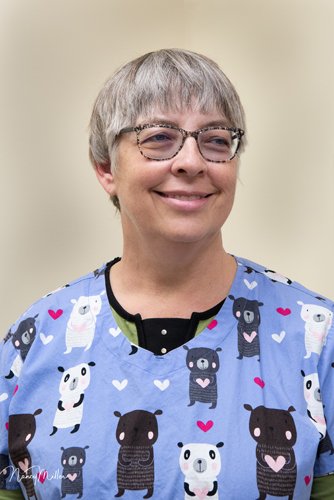
Dr. Heather Hannah owns the St. Clair Veterinary Facilities, the longest continual business (since 1947) in the Hillcrest Village BIA, of which Dr. Hannah is currently Chair. In her interview, Dr. Hannah describes the changes since she first arrived from Iroquois Falls in 1989. The neighbourhood has become more cosmopolitan, with more languages spoken and a very successful restaurant scene. Even the pets have evolved, from mostly big yard dogs to lots more cats and other dog breeds - “Everything is a Doodle or a Frenchie.”
AUDIO INTERVIEW
As you listen to this interview, you may enjoy following along with the summary/transcript below.
TRANSCRIPT
0.00.06 MARNY (Interviewer): Today is January 10, 2026. From the St. Clair West Oral History Project, and today we are interviewing Dr. Heather Hannah from the St. Clair Veterinary Clinic. Welcome Heather. And first question: Where is your business located?
0.00:27 DR. HANNAH: So, currently, my business is located at triple 7 St. Clair Avenue West. So it’s just west of Arlington, on the south side of St. Clair. It was since 1947 located at 779 St. Clair Avenue West, which makes it actually the longest continually running business of St. Clair West, or of Hillcrest Village Business Improvement Association.
0.00:56 MARNY: Wow. That’s impressive.
0.00:58 DR. HANNAH: There is uh, there are a couple of other businesses that are slightly older, like New Paramount Studio. It’s going to be one hundred years old, but it was at a different location.
0.01:09 MARNY: Okay. Good. You have a lot of knowledge of the area.
0.01:13 DR. HANNAH: Not bad for a non-native.
0.01:16 MARNY: Non-native?
0.01:18 DR. HANNAH: I’m not from Toronto.
0.1: 19 MARNY: Oh. Where are you from?
0.01:21 DR. HANNAH: Iroquois Falls.
0.01:22 MARNY: Which is in the States.
0.01:23 DR. HANNAH: No.
0.01:24: MARNY: I’m sorry. I don’t
0.1:25: DR. HANNAH: You don’t know your province. MARNY: No, I don’t.
0.1.28 DR. HANNAH: Iroquois Falls. It’s halfway sort of between Timmins and Cochrane, just south of 49th parallel.
0.1.34 MARNY: Oh. Okay. So, you did come far south to join us.
0.01:39 DR. HANNAH: Yes.
0.01:44 MARNY: When did you start working at the clinic?
0.01:45 DR. HANNAH: I started in May 1989, sort of by accident. This was not my intention to ever be working at a vet clinic and certainly not in Toronto.
0.01:55 MARNY: And what was the accident then?
0.1:58 DR. HANNAH: It was actually a medical incident which caused me to have a slight car accident, and lose my driver’s license, so my career was altered from being a bovine veterinarian to being a small animal veterinarian.
0.02:11 MARNY: I’m sorry about the accident, but I’m glad…
0.02:13 DR. HANNAH: The accident was pretty minor. The loss of license was a career altering moment.
0:02:20 MARNY: Yes, yes. Well, I’m sure you got it back.
0:02:22 DR. HANNAH: Oh, yah.
0:02:24 MARNY: Wow. That’s quite a story. Who was running the clinic at the time.
0:02:28 DR. HANNAH: Well, I answered an ad and it was all by accident that I came to this clinic and it was only because of my love of or start of love of travel that I actually came to this clinic. Otherwise, I would not have picked this one.
0:02:42 MARNY: So, what was it?
0:02:45 DR. HANNAH: Well, I was going to England for three weeks with my boyfriend and, now husband, and his two sisters and two nieces in July, prime time for veterinary clinics, and I had applied for several around in the Toronto area because my boyfriend was an engineer at a consulting firm in Etobicoke and so I needed something on transit, that, or I could walk to, or whatever, because I didn’t have a driver’s license anymore. So, I answered several ads and um most of them were not going to let me take off three weeks in July to go on my vacation. And the owner of this clinic, who was later my partner and so forth, Dr. J. D. LeGallais said, “Well, I guess we could make it work”. That was his only knowledge of the work/life balance, but it worked out fine.
0:03:44 MARNY: Sounds great. Good for Dr. LeGallais. And um I believe Dr. LeGallais wasn’t the first owner of that practice.
0:03:50 DR. HANNAH: He certainly was not. The first owner was actually a woman, Dr. Edith Williams. I only... I never met her. I think she died in 1974. But I have several clients who knew her, and I bet your mother did.
0:04:05 MARNY: Maybe. I don’t remember her ever mentioning her but,
0:04:08 DR. HANNAH: Anyway, she was married to a woman, a physician. That marriage was supported I think by the physician’s family but not by Dr. Williams’ family. I only know this because somebody who was doing their Master’s Thesis on Women’s Studies told me one time years and years ago, asking me if I knew Dr. Williams. No. But if you call several of these old ladies and speak very loudly, they can tell you about her. I have two clients left who knew her because they were children when…
0:04:52 MARNY: Yes.
0:04:53 DR. HANNAH: they had gone with their parents to the vet clinic. Anyway, for better acceptance at the time, the couple lived in Burlington and commuted into Toronto.
0:05:05 MARNY: Burlington was a…
0:05:06 DR. HANNAH: [laughter] But imagine that. Burlington was more hip for the gay scene than Toronto. But I betcha that was the case in the late forties.
0:05:16 MARNY: Sounds like it. That’s very radical, I think but…
0:05:20 DR. HANNAH: Well yes it would have been and especially this neighbourhood was very WASP so,
0:05:26 MARNY: At that time. It certainly became more multi-cultural…
0:05:31 DR. HANNAH: …cosmopolitan. Even within my time, it much changed.
0:05:34 MARNY: Yes. Well, we’ll get to that. In fact, the next question is: Where do you customers come from?
0:0:5:42 DR. HANNAH: Well, most of them come from the immediate catchment, which in itself makes them quite diverse because you’ve got and even at the beginning you’d still have apartment buildings, low-rise, now they’re much higher, and then houses and so forth. So, some people will have moved to suburbs and still come. But by far, most would come by transit or walk or park or whatever. We were, there were only a couple of veterinary clinics on St. Clair. So, the catchment area was much wider at one time, but now it’s a little bit more condensed. But so is the population much more dense anyway. So that’s where most come because it mostly lends itself, it’s like a neighbourhood clinic and this whole area makes it more of a neighbourhood, which is the only reason I stayed because I said I’d be here for one year. That was a long time ago.
0:06:43 MARNY: [Laughter]
0:06:45 DR. HANNAH: But I soon found that it was very small townish. I’m from a small town where everybody knows everybody knows everybody. Um, I have two siblings still there. They know everybody. Anyway. In the town. So, I thought, Oh. Look it, I thought, this is a client and his ex-wife, and the mother-in-law. This is very similar to being in a small town.
0:07:11 MARNY: Right.
0:07:12 DR. HANNAH: So, I thought I kind of like this.
0:07:14 MARNY: Yes. I can totally understand that feeling. A number of people we’ve interviewed have talked about the kind of small community feeling …
0:07:29 DR. HANNAH: Yea, because when I first thought: “Whah, I’m moving to Toronto Oh my gad.” That was always in my mind. The big city. You’d only be going downtown at, you know, maybe the theatre, museum or art gallery, or whatever. How do you live here?
0:07:46 MARNY: And yet. Very liveable. Very liveable.
0:07:48 DR. HANNAH: Very liveable.
0:07:50 MARNY: Now about the patients that you served. How have they changed over the years?
0:07:56 DR. HANNAH: They have. When I first started, you’d have a lot of big dogs. I called them the yard dog.
0:08:05 MARNY: Oh yes.
0:08:06 DR. HANNAH: German Shepherds, Pitbulls, Rottweilers. Whatever. And then there’d be a few little dogs. I call those the kitchen dogs. They belong to mom. Or whatever. Because, you know, we had a groomer as well. So, you’d see a lot of Poodles, Shih Tzu’s or Shitapues, or whatever. Um. There were a few cats. Now, certainly, there’s way more cats and much more medicine focused on cats. I’ve gone from cows to cats. And the dog breeds certainly have changed as well. Pitbulls are officially banned in the province. So, people went for other big breeds if they were that inclined. Or they just now of course everything is a Doodle or a Frenchie. Now it’s going to be a Datsun that’s changing in the last couple of years.
0:09:01 MARNY: Interesting. Okay.
0:09:03 DR. HANNAH: There is fashion in dog breeds.
0:09:06 MARNY: Yes. Yes. Okay.
0:09:08 DR. HANNAH: Or trends you might want to say.
0:09:011 MARNY: Trends. Um. Tell me about your staff. How have you managed to staff your business?
0:09:16 DR. HANNAH: Well, most of the staff, well originally they of course were already working at the clinic for Dr. LeGallais. He had ones that were there for quite some time. They were all mostly local except for one woman. She used to commute in, but she was a local girl that had moved out to the suburbs with her husband. I retained staff for a long time. One of my employees has just relocated due to family things. But she left after twenty-nine years. My next one is about around twenty-six years, twenty years. The majority of them actually either live in the area or had lived in the area. Say as I hired them as teen-agers or twenty year olds or whatever. A couple have come from elsewhere and moved to the area.
0:10:14 MARNY: Thank you. [laughter]
0:10:15 DR. HANNAH: That’s a good idea. [Marny: laughter] Or close to the area. A lot have come up sometimes through, they were high school students, and they came as co-op students and so forth.
0:10:31 MARNY: Okay. So how have your clients changed then?
0:10:34 DR. HANNAH: Well, there’s been just as the neighbourhood has changed, of course the clients have changed. Now I think of as more observant than Dr. LeGallais because, in the nineties, I hired a Spanish-speaking woman to be receptionist, and he asked me why and I said: “Well, because I used to get off the bus at Oakwood and St. Clair and walk the neighbourhood, and basically lived the neighbourhood, and eating out and everything. And I said, well it’s becoming Hispanic, so we have more Spanish clients.” We always when I first started, the majority were, you know, if they weren’t English-speaking, they were Hungarian or Portuguese or Italian and we had Portuguese and most often Italian covered. Hungarian, I would just look outside at the Budapest Diner which was right across and they had their phone number on the awning, and I would phone up and ask for a goulash and the translation.
0:11:33 MARNY: [laughter] At the same time.
0:11:35 DR. HANNAH At the same time. And. So. But in the nineties, of course, with the economic meltdown like in Argentina and Chile, with other political problems, we had a lot of influx. So I said well we need someone Spanish speaking. So that has changed because just as the neighbourhood has changed I consider this sort of like a little Bronx or Manhattan or something. You know, all these people in flux.
0:12:01 MARNY: Right.
0:12:02 DR. HANNAH: And so, the clients are like that too. And it’s quite all representative of Toronto. I have every level of client, you know, from homeless to people who live in Forest Hill or Wychwood Park.
0:12:19 MARNY: Yes.
0:12:20 DR. HANNAH: And all kinds of languages spoken. We try to cover the Latin ones.
0:12:25 MARNY: Yes. And otherwise bring your own translator. [laughter]
0:12:33 DR. HANNAH: The Latin ones we can cover, but Hungarian was not a language I was gonna learn.
0:12:37 MARNY: Oh gosh. Hungarian is unique as far as I know.
0:12:39 DR. HANNAH: Very unique. It is. Yes. It doesn’t follow the Indo-European tree of languages.
0:12:51 MARNY: … So, we did talk a little at the beginning about how the block looked, or that the fact that your business was one of the first, well, the first really or the longest there. What changes have you noticed on the block?
0:13:03 DR. HANNAH: So, my block is tiny. There’s only four buildings, two of them are apartments and so forth. So next door to us was, of course, somebody that you already interviewed, was Robert Ashley. He had his salon, he’s jumped around. And then there was always sort of a restaurant or coffee shop and then the other ones have gone through. There was a variety store. In fact, that’s where I am now and it was a variety store and when we moved, when I started in 779 which was a benefit to me now because they added on an extension to the back I think so they could sell more cigarettes. So that extension has come in handy because I have the longest building or the deepest building so that’s been quite handy. But other things that were around. There was only like across the street. It was mostly a lot more banks and so forth. There actually was no place to get coffee. There was a McDonald’s and then there was those men’s clubs. I first went to on a Sunday desperate for a coffee and I thought: “What is this?”
0:14:25 MARNY: Those Greek …
0:14:27 DR HANNAH: Well, there was also on this side, on the south side there was some Italian ones too. And they were just gambling houses, right?
0:14:33 MARNY: Really.
0:14:35 DR HANNAH: That’s what those Greek guys did. They’d gamble, drink coffee, talk about how things were much better in whatever country they came from, and talk about how they don’t like their wives.
0:14:47 MARNY: [Laughter] Well that’s a cheery subject.
0:14:51 DR. HANNAH: Well, that’s my take on that. So, you couldn’t get a coffee. Now at least I have my choice of coffee and so forth. Right on my own block, there’s coffee everywhere.
0:15:02 MARNY: Actually, I heard about another place opening up [DR. HANNAH: Yes.] for coffee…
0:15:06 DR. HANNAH: Yes, It’s either lately coffee or cannabis.
0:15:10 MARNY: Yes, that’s that too. So, there’s been a lot of change that way. Did any of the changes affect your business? Certainly, the fact that you have now what was a variety store has. But in any other way?
0:15:27 DR. HANNAH: Affect the business. My business maybe not so much as some others except of course with the change in banking, like the disappearance of banks just a kind of the bookkeeping part of the business. It’s not really the business directly. But you have to keep the boss happy. So you know, I’m much happier that there’s a lot more variety of restaurants to go to or you know I can more easily get a coffee if I don’t want to make it myself.
0:15:59 MARNY: Okay. What about your connections to other businesses on St. Clair? I know that you are involved with the BIA, the business, What does BIA stand for?
0:16:10 DR. HANNAH: It’s a Business Improvement Association. So, yes, I’m the Chair, have been for the last six years. I was on the Board for a few years before that, so I have I guess a lot of connection with all my businesses, property owners and so forth.
0:16:27 MARNY: Do all the businesses belong to the BIA?
0:16:30 DR. HANNAH: Yes. Whether they want to or not.
0:16:31 MARNY: Okay. It’s not a choice. Okay.
0:16:36 DR. HANNAH: And also, the property owners.
0:16:38 MARNY: Oh, as well.
0:16:41 DR. HANNAH: Of commercial property on the street.
0:16:45 MARNY: Right. What are the goals of the BIA?
0:16:47 DR. HANNAH: Well of course the goals are to promote your local area and unfortunately I don’t know who came up with this idea. St. Clair is chopped up into little sections.
0:16:56 MARNY: Yes. Your section goes from where …
0:17:00 DR.HANNAH: Our section goes only from Christie to Winona. [Marny: Yes] That’s the yellow section somewhat because that’s my favourite colour for businesses.
0:17:11 MARNY: You got to choose the colour?
0::17:13 DR. HANNAH: Yes. Why not? Because don’t you notice my interior is all yellow?
0:17: 17 MARNY: Oh, I love yellow myself.
0:17:19 DR. HANNAH: Exactly, so, yellow, you know, so may as well make it stand out. Anyway, So I, you know, certainly I try to frequent most of the businesses that I can. [Marny: Yes.] I eat out a lot or buy, you know, if I do cook, I usually shop very locally. Anyway, and then, you know, use some of the other services whether it’s one of the rehabilitation places or whatever, and I used to always like to go to the vintage shops and so forth so, anyway.
0:18: 04 MARNY: Unfortunately, they’ve gone. Gypsy.
0:18: 07 DR. HANNAH: Gypsy and Caravan. [Marny: Yes.] I know my clothing allowance has had to go elsewhere.
0:18:18 MARNY: [laughter] We do have a Salvation Army not to far from you.
0:18:20 DR. HANNAH: Yes I know. I don’t usually do that. I do still donate to them, but anyway. Getting back to involvement with other businesses, well I try to get other businesses involved or thinking some are less receptive to that idea. Anyway, so what do we try to do? We try to improve the streetscape, so we have all those planters, banners and pole wraps. We also put up several murals in our defence against graffiti, as well as decorative. We also run little events. We sponsor of course one of the biggest street festivals in Toronto, which is, Salsa on St. Clair. We sometimes run contests. We sponsor other things and now most of this I have to say has really advanced in the last six years. Previous to that I would say we mostly had some flowers and sponsored Salsa, and that was about it.
0:19:21 MARNY: Okay. Now have you got a sense of how successful this neighbourhood is for businesses other than your own?
0:19:32 DR. HANNAH: It certainly is a desirable place to come. The rents are still reasonably low. It’s a successful place. I think there are several long-standing businesses. Restaurants are hard sometimes to judge because restaurants by themselves are always a hard business to keep run. But we have several that have been here for years and a few that have left that were here longstanding. One of my favourites, Mi Tierra, which was a Columbian restaurant. They were here for twenty-three years. This must be a successful place to run a business.
0:20:08 MARNY: To run a business, right. So tell me about some of the oldest businesses of the neighbourhood.
0:20:16 DR. HANNAH: Some of the oldest ones. Well, of course, you have Macelleria Atlas, which when I do want to cook, I go there and buy meat. Then, of course, there’s us, even Robert Ashley for hair, then not there because he started a couple of years before I did. There’s as I said New Paramount Studio. I think they have been at that location since the fifties. Then, of course, Gerry’s has been there since the seventies. Let’s see what else. Some of the other ones have had various changes in them which is not unusual because they’ve mostly been restaurants. Even A Capella has been there for quite some time now.
0:21:14 MARNY: Yes. And the Karate Studio?
0:21:16 DR. HANNAH: And the Karate has been there forever. Ferro’s restaurant has been quite old. Of course, his brother at the Rushton. So, on the whole, they’re quite a long time. Which is quite something for the restaurant scene.
0:21:36 MARNY: It certainly is and in fact. That’s one of the draws of the neighbourhood for the rest of the city. Well, I guess we’ve kind of covered the next question which was do you shop at any of the neighbourhood businesses on St. Clair. We have certainly covered that.
0:21:52 DR. HANNAH: I would have to say yes, probably more than a lot of people.
0:21:58 MARNY: Yes. Well, me too. I prefer walking and that’s the way…
0:22:04 DR. HANNAH: Yah. You can. This neighbourhood lends itself quite well. I mean you could get away easily without a car. I mostly have my car for getting away. But certainly, you can survive quite easily and just walk to all your appointments. You know I walk to the dentist, I walk to the optometrist, walk to the butcher, I walk to the green grocer, I walk for clothing, for my hair. I could get a massage. Yah, I don’t really need to go anywhere. [Marny: And the drugstores.] And the drugstores. And if I really needed to go somewhere, I’d take the streetcar and go downtown and whatever.
0:22:45 MARNY: Yes. True. Exactly. So that comes to the streetcar.
0:22:51 DR. HANNAH: Ah. The streetcar.
0:22:52 MARNY: We’ve heard about the negative and positive effects of the streetcar. What’s your impression that the dedicated streetcar line.
0:23:01 DR. HANNAH: Ah. The dedicated. Yes I can remember when you used to drive on the tracks. I once had a friend come and pick me up in Etobicoke and we were going to the Budapest Diner and hit the tracks. “What do I do?” Just drive. If you see the streetcar, get out of the way. Ah yes. The right-of-way. Wasn’t that a lengthy political battle and so forth? I don’t know whether it’s really aided in safety. I see plenty of accidents at my corner. I have the best video when the police are there. Sometimes for even accidents involving the streetcar and other vehicles, or the platform and vehicles, or the platform and pedestrians. Yes. Arlington and St. Clair is a high accident intersection.
0:24:05 MARNY: Who would have guessed? I had no idea.
0:24:08 DR. HANNAH: Certainly, I think the right-of-way makes the streetcar, this streetcar on St. Clair. I don’t think that’s the case for all around the city. I think it is more efficient. Now, I think it could have been done better. Maybe they should have gotten some better advice from Holland, or most other European cities that have streetcars, but that’s a catch. It’s been good for my business because you can come by the streetcar and it stops almost in front of my business. So that part’s always been good. I didn’t suffer as much when they were digging up the whole road, mainly because I was an essential service, so you know people still had to find some way to get to me even if they had to go over a drawbridge. Whereas if you were going to a restaurant, well, if you couldn’t get across the street, maybe you’d go on this side, or you maybe you wouldn’t go outside, out at night. I can remember picking out a New Year’s dress from my car because it was so slow to drive while they were doing the construction and I would just look as I was driving passing it. Oh, that looks nice. I could try that one on some day. So yah, that was kind of just a painful experience in itself especially when certain businesses closed that were favourites of mine but whatever.
0:25:40 MARNY: And they closed because of the streetcar…
0:25:41 DR. HANNAH: Yah.
0:25:42 MARNY: Because of the destruction.
0:25:43 DR. HANNAH: Yah. It was hard to get more customers…I don’t think anyone wanted to come to St. Clair because they heard the horror stories of the streetcar. [Marny: Yes] Now that’s a different story. So, we didn’t really suffer that much but that’s similar to when COVID happened. I still was an essential service.
0:26:06 MARNY: Right. Right. We haven’t been asking people about how COVID affected people. I guess we all kind of know how it affected us. What about the conversion of the TTC Barns? What do you remember about that?
0:26:24 DR. HANNAH: Other than it makes it a dog park that has a high parasite load. That’s about the only part that really affects me. Yes. I like to go to the yard on art show and so forth. When that dog park opened, I once had a university student. Now she’s become a veterinarian, but she was a biology student at the time, and she needed a summer research project, so I had her go and survey and take samples from the sand and screen it for dog parasites.
0:26:55 MARNY: So, it’s been good for your business.
0:26:57 DR. HANNAH: In some ways it’s been good. Yes. I don’t really know much more to say about the Barns.
0:27:08 MARNY: What about the farmers’ market? Do you ever go to that?
0:27:12 DR. HANNAH: Not really because I work Saturdays.
0:27:15 MARNY: Exactly. It’s Saturday mornings.
0:27:16 DR. HANNAH: I work Saturday mornings so no. And if I’m not working, that might be the only time I get out of town. So, I have to say I do not frequent the Market very often.
0:27:29 MARNY: But at least that whole block, well, it took up at least the block, well more than one block. It was just a wreck.
0:27:43 DR. HANNAH: It’s certainly been beautified, and a better use of the buildings and so forth than were there so that part’s been fine.
0:27:51 MARNY: And there’s an ice rink, kids’ playground.
0:27:55 DR, HANNAH: That’s been a vast improvement. It just doesn’t have that much effect on me.
0:28:00 MARNY: Right. Has it, do you think it’s been a draw to the neighbourhood, do you think?
0:28:07 DR. HANNAH: It’s a bit hard, that’s a bit difficult to say the effect. Now it’s certainly one of those intangible benefits maybe of living here.
0:28:17 MARNY: Good. Well, that’s, that kind of leads me to the question of now the benefits of living in this neighbourhood. What’s the positives about being here?
0:28:32 DR. HANNAH: Certainly, the positives of living in this neighbourhood because previously I used to sleep in Etobicoke, I said I lived in this neighbourhood. But finally, now I moved so that I can sleep in the neighbourhood too. I always know I can have that second glass of wine. As I said before this neighbourhood is great for living because you’ve got … local businesses and they know who you are we know who they are and you can just walk to them and even pop in here or pop in there or pay later sometimes… so it’s got that very familiar and small town feel and that part is good. It’s safe to walk the streets. I’ve walked them at different times of the day. That sounds kind of strange but it’s quite safe. Sometimes I’ll come to the clinic to check on patients in the middle of the night. I’ve got no problem doing that … or come home real later for whatever. That’s fine. Because I often get asked that, that’s part of the BIA safety and stuff and I always say, well, you know, you don’t really have that as a problem thank you.
0:29:58 MARNY: No. I mean certainly every part of the city has their are moments…
0:30:03 DR. HANNAH: We have some issues.
0:30:06 MARNY: And car accidents you’re talking about but at least not from the violent form of … And, in terms of change, if there was anything you could change about the neighbourhood, can you think what that might be?
0:30:31 DR. HANNAH: Less cannabis stores?
0:30:36 MARNY: They don’t bother me.
0:30:38 DR. HANNAH: Well, it’s been good, it’s been great for business in a way. There’s so much toxicity, intoxication for dogs. It’s often mysterious for people who don’t realize what the dog has done. I mean that’s kind of an unfortunate comment but
0:30:56 MARNY: Sort of like the dog park, It’s a source of business for you.
0:31:04 DR. HANNAH; No. Certainly, I think this neighbourhood has come a long way since 1989. I don’t know if I would have. I always enjoyed, I always thought it was interesting. Whether I would have enjoyed living here then as much as I do now. I don’t think I’d make too many changes right at the moment.
0:31:30 MARNY: I suppose that’s something that the BIA discusses sometimes: What can change?
0:31:37 DR. HANNAH: Well, there’s limits as to what we can change other thanOwhat we have control over.
0:31:44 MARNY: Yes, right. Well, do you have anything else you’d like to add about your time here?
0:31:55 DR. HANNAH: Well, I must have thought it was good. I’m still here after thirty-six years, almost thirty-seven.
0:32:00 MARNY: Okay. Tere?
0:32:02 TERE: I just have a comment. Do you think that the two businesses that we have in the neighbourhood because I live in the neighbourhood as well like FK or the stores that have the Michelin designation, do you think that has affected the neighbourhood in some way? It’s elevated the neighbourhood as a whole?
0:32:29 DR. HANNAH: I would have to say the whole restaurant scene has been elevated from thirty-six years ago. It was very limited. I mean there was Archers, if you wanted to go out for a very expensive meal. At least I thought it felt that way at the time. [Marny: Steak kind of dinner.] Yah. I used to go to the Budapest Diner, there was McDonald’s. There wasn’t much else.
0:32:51 MARNY: There was the Blue Door.
0:32:53 DR. HANNAH: There was the Blue Door. Okay. But which has changed into Mezzetta’s. But so that’s been there for a long time, and I’ve gone there for a long time but there wasn’t much else, you’d have to admit. So, I’d have to say the restaurant scene on the whole is much elevated. And certainly, having ones that are Michelin mentioned goes a long way. Yes I have to admit I go to FK as well. I must go to Pukka much more often. I expect, or Aviv’s, since it’s right next store.
0:33:26 MARNY: Pukka. Oh, they’re fabulous.
0:33:30 TERE: And Pain Perdu, the coffee shop. It’s been there for what thirty-five years?
0:33:36 MARNY: I don’t think it’s that long. Is it?
0:33:39 HANNAH: Maybe twentyish.
0:33:42 MARNY: It used to be different when the owner was actually working in the store, and he would make more desserts.
0:33:51 TERE: It’s the same owner.
0:33:53 MARNY: Yes, but he doesn’t make dessert.
0:33:56 DR. HANNAH: Well, I think of that there’s been a change after COVID and so forth. For some of the coffee shops haven’t totally decided what they are yet or what they were they’ve gone back then. That’s only a few of them.
0:34:16 MARNY: Pain Perdu is more like a lunch place with good coffee and nice croissants. [Tere: the quiche.] Oh yes, the quiche is the best. It is, I think so. Do you have a favourite quiche place? Do you dispute the quiche place?
0:34:39 DR. HANNAH: No I don’t dispute the quiche, I just don’t eat as much. There’s so many other things to eat. There’s only so much I can eat in a day. Although I don’t know about that sometimes.
0:34:54 MARNY: Thank you so much Dr. Hannah. It’s been wonderful to talk to you. And long may your business reign.
0:35:01 DR. HANNAH: Thanks.
0:35:03 TERE: Yah. Definitely.