Before the Wychwood Barns
The Edwards Family and the J. E. Edwards and Sons Leather Goods Factory
by Stephanie Lever, November 2013 (edited May 2026)
Before we begin this exploration it is important to acknowledge that the land that is being described is in the traditional territory of the Haudenosaunee, and most recently, the territory of the Mississauga of the Credit First Nation. The territory was the subject of an agreement between the Iroquois Confederacy and the Ojibway and allied nations to peaceably share and care for the resources around the Great Lakes and we are grateful for the opportunity to research and live and work on this land.
The history of this piece of land is a snapshot of the growth of the City of Toronto. This article will tell a bit of that story, relating some of the history of the land and the Edwards Family who built and ran the tannery and leather goods factory. It pre-dated the building of the St. Clair car house, now referred to as the Wychwood Barns.
The Artscape Wychwood Barns are a popular destination. People from around the city know them for a variety of reasons. They are aware of the many events that now take place there: the Farmers' Market on Saturdays, the children's playground, the green field in summer, the skating and shinny rink in winter and diverse cultural events held all year long. However, they may be unaware that 100 years ago the land on which the Barns now stand was host to many similar uses: storage and maintenance facility for TTC streetcars, a tannery and leather goods factory, and the site of cricket grounds[i] and soccer games. In the Goad's Atlas for 1899 it is shown as "brickfields". And for a while there was also a public library in the leather factory. It saw recreation use as the site of Poverty Pond,[ii] the skating rink featured in the 1915 photo (Fig.1). That photo is now an icon of the reinvented barns.
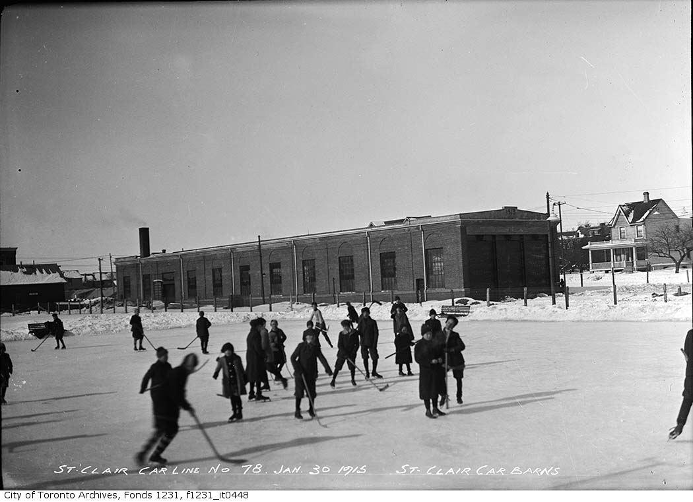
Fig. 1 A January 30, 1915 view shows the multiple uses of the Wychwood site. Children play on frozen “Poverty Pond” in front of the streetcar barn (now called Barn 2) and the J. E. Edwards and Sons Leather Goods Factory (far left background) was still operating. The house on the far right on Benson Avenue was, in 1911, occupied by tanner George Hamilton, his wife Annie and their seven children. Photo: City of Toronto Archives, Fonds 1231, item 0449
The land the Barns sit on is situated on township Lot 27 in the 2nd concession, bounded by Bloor Street and St. Clair Avenue on the south and north, and Manning Avenue (now Wychwood Avenue) and Rushton Road on the east and west. Lot 27 was granted to Col. Samuel Smith in September, 1793 during the week when Lt.-Governor John Graves Simcoe made all the initial Township of York grants. In 1806, Smith finally got around to patenting the lot.[iii] Samuel Smith was an administrator of Upper Canada during the War of 1812. He also had a large grant of land on the east side of Etobicoke Creek[iv] so never lived on lot 27.[v]
In 1823 he sold the lot to Peter McDougall, a merchant of Toronto. Peter McDougall married Christy Mount[vi] and Christie Street is named after her. In land documents[vii] as early as 1835 the street was referred to by that name. By 1846 the north part of the lot was owned by Robert J. Turner, and in 1855 it was subdivided by Passmore's Plan 119 and named Bracondale Hill Estate. Over the following years lots were sold to various people whose names are part of the history of the neighbourhood: Marmaduke Matthews and Alexander Jardine of Wychwood Park, Alexander Burnside and Col. George Augustus Sweney.
By 1885 much of the land from Victoria Street (now Tyrell Avenue) to Albert Street (now Benson Avenue), and from Manning Avenue (now Wychwood Avenue) to Christie Street was owned by John E. Edwards (1835-1900). By 1899 he had also acquired the land from Albert Street to the lane behind Harrington Street (now Ellsworth Avenue) between Manning and Christie.[viii]
John Edward Edwards was born in England. He served twenty-one years in the Royal Engineers and came to Canada in 1875. His military career had taken him to the Crimea, Turkey, Malta, Cape Town South Africa and to Ireland.[ix] He married Elizabeth Jane Slade in South Africa and they had eight children: Alice, Elizabeth, John, William H., James, Charles, Emily and Mary. Upon coming to Canada he worked on the boundary survey for two years and, after discharge in 1875, he came to Toronto.[x] His army record described him as 5 feet 6 ½ inches, with blue eyes, dark brown hair and a fresh complexion. The record also indicates that he was of very good character and held medals for Crimea and Turkey and for “doing service and good conduct”.
In 1876 he set up shop as a saddler and harness maker at 483 Yonge Street,[xi] just north of present day College Street. In 1877 he moved his business to 663 Queen Street W., then to 105 York Street in 1878.[xii] In 1880 he moved to the suburb known as Bracondale and lived at the south-west corner of Christie Street and Davenport Road in the Bracondale Post Office (Fig.2). He served as Deputy Post Master under Frank Turner. Frank Turner, the son of Robert Turner, previously mentioned, was the Post Master for Bracondale, and built the post office.
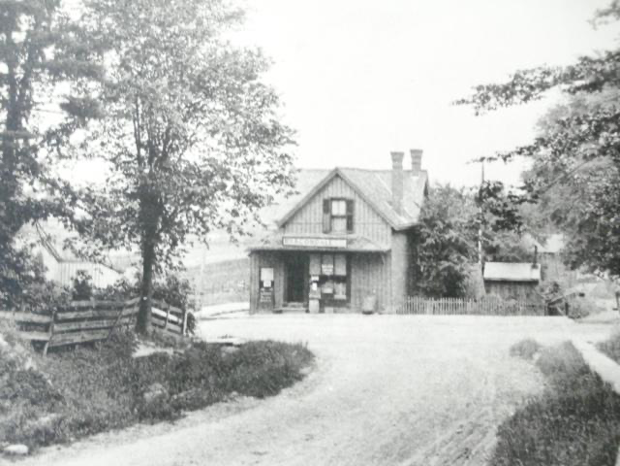
Fig. 2 The Bracondale Post Office (circa 1899) at the southwest corner of Davenport Road and Christie Street also housed a dwelling, a shop and a meeting hall. The John Edwards family lived here about 1880. Photo: City of Toronto Archives, fonds 2, series 8, file 40
By 1883 Edwards owned and operated a leather goods factory as well as having his duties as Deputy Post Master. The factory building is described as being "up the hill--the Christie Street hill-North of the Jardines on the East side." This description is from a story told by Emily Elizabeth Boggis and indicates that the family owned a “long building” in which they ran a leather goods factory, making school bags, belts and other small items.[xiii] In an age of horse drawn transport, the making of saddles and harnesses at the factory filled an important role in transportation. An anecdote relates that a saddle and harness made by the Edwards was awarded a prize at a competition in England.[xiv]
In 1883 Edwards invited his cousin Edwin Boggis to come to Canada to take on the job of Deputy Postmaster. As there was not room for the Boggis family to live in the post office, they were temporarily housed in the leather factory. From an oral history account by one of Edwin’s children, Emily Elizabeth Boggis, it seems that the early factory was further south than the later brick built factory[xv] and situated on Victoria Street (now Tyrell). The Edwards were in the process of building a big house further up Christie Street at the time. When they took up residence there, the Boggis family moved to the Post Office and took over the running of it, as well as setting up a grocery store there. They ran it from 1884 to 1901.[xvi] Eventually they lived on St. Clair Avenue at Christie Street (Fig. 3) and Edwin Boggis worked at the leather factory.[xvii] By 1921 he, his wife and daughter Esther Rose were living at 228 Wychwood Avenue and he was working as an insurance agent.[xviii]
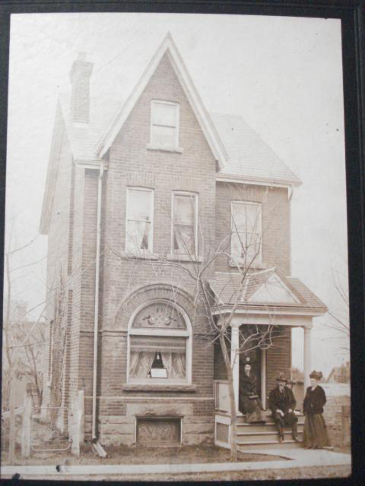
Fig. 3 Edwin and Emily Boggis and their Daughter Esther Rose, relatives of the Edwards, moved from the Bracondale Post Office to 689 St. Clair Ave. W. at Christie, c. 1903. The site, on the south west corner, became a bank, then a Starbucks, and is now a pizza shop. Photo: City of Toronto Archives, fonds 2, Series 8, file 40.
In 1890 St. Clair Avenue was no more than a road allowance and not yet opened as a street.[xix] Even by 1899 the Goad's Atlas shows few buildings and houses, although much of the land had been subdivided into house lots. By 1884 (as related by Emily Elizabeth Boggis Anderson) the Edwards family had built a house at the north-east corner of Christie Street and Albert Street (now Benson Ave.) A building is indicated there on the 1884 Goad’s Atlas on plan 119 lot 34, having the same footprint as a building shown on subsequent maps. This house was built in the popular style referred to as Ontario Cottage and still stands today (Fig. 4). Houses in the Ontario Cottage style were built throughout the British Empire by members of the Royal Engineers.[xx] The current owner of one part of the house states that, while renovating, he found that the siding on the house consisted of boards that measured almost 2 feet wide. The house was at some point divided into two dwellings: 615 and 617 Christie Street. The photo below (Fig.4) shows features on the right hand side, along with the central peak, which maintain the look of the original house. The 1911 census shows that it was the dwelling of the family of William H. Edwards, one of John E. Edwards' sons.
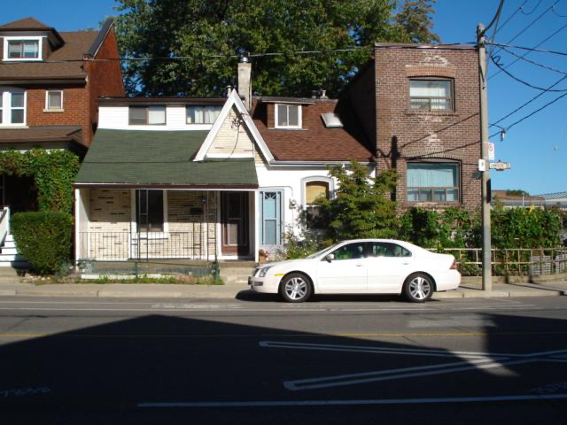
Fig. 4 The circa 1890 “Ontario cottage style” house in which the John Edwards family lived for a few years; the now divided dwelling still stands at 615 and 617 Christie Street, just north of Benson Avenue and the Wychwood Barns. Photo: Stephanie Lever, September 2013.
The first leather goods factory burned down in 1899[xxi] and was replaced by the brick built factory which occupied the south-west portion of the land where the Wychwood Barns now stands. It is curious that the land is identified as Brick Fields in The Goad’s Atlases for 1890, 1899 and 1903 (Fig. 5).
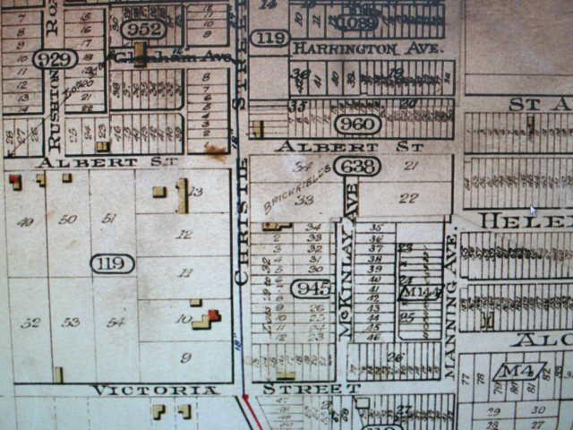
Fig. 5 Goad’s Atlas 1890 showing brickfields, the early factory building and house at the corner of Christie and Albert St. (now Benson Ave.) https://www.toronto.ca/ext/archives/goads_atlases/1890-1899/g1890_1899_pl0049.jpg
There were several brick making businesses in the vicinity: William Greensides, Henry Dent, Richard Ratlidge and Son. These employed many of the residents of the area during the last decade of the 1800s. Perhaps they had a business arrangement with J.E. Edwards for the use of his land. All three of these maps show a building directly to the south of the Brick Fields in plan 945 on lot 1. This is likely the first building described by Emily Boggis as a "long building" and the one that burned in 1899. On both the 1910 and 1913 Goad's Atlas maps there is a substantial building shown on the land once marked Brick Fields and this would be the building shown in figure 6.
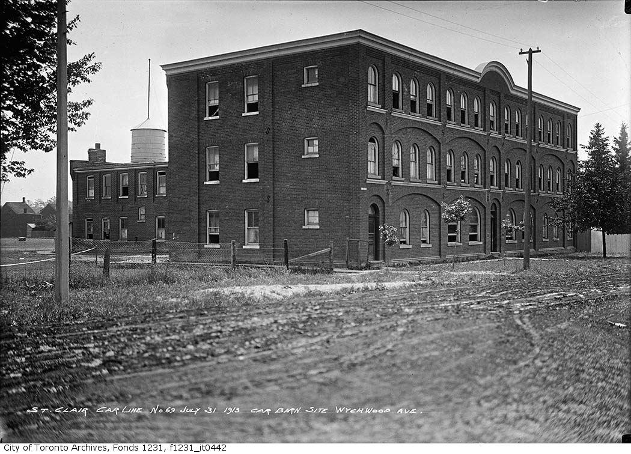
Fig. 6 The J.E. Edwards and Sons Leather Good Factory, facing muddy Christie Street, July 31, 1913 Photo: City of Toronto Archives, fonds 1231, item 442.
The leather factory played a role in the community beyond its commercial purpose. Events there can be learned from articles in the Toronto Star. The Bracondale Public Library had been started at the Bracondale Post Office and was incorporated April 30, 1898.[xxii] A report in 1899 showed that the library contained a collection of 486 books.[xxiii] In March of 1901 the "Bracondale Public Library Board was offered a free site on which to build its new reading room and library".[xxiv] This free site was at the J. E. Edwards and Sons Leather Goods factory. The library occupied a room next to the enamelling shop and was outfitted with tables and chairs. By March 1902 the Library Board was reported to be meeting "in the library building, Christie Street north.”[xxv] In May it was reported that "...this institution is in flourishing condition and is well patronized by the residents. There are now about 1,500 books on the shelves.”[xxvi] The library was run by William H. Garrett (1869-1938) who was an employee of the factory. He lived on the south side of Alcina Avenue close to Bathurst Street at the time. Garrett was a "Japanner" in the factory, applying layers of varnish to the fancy leather goods. For this task he likely worked in the enamelling shop and so was close to the library. He had been educated in England and loved books, so he was deemed an ideal choice for the role of librarian. He was also a member of the Library Board.[xxvii] Later he became the manager of the factory and lived in the former Edwards home at 615 Christie Street.[xxviii] William's brother Joseph also worked at the factory. (Fig. 7)
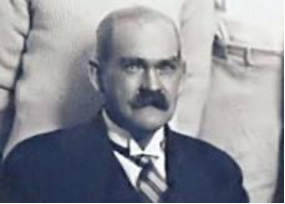
Fig. 7 William H. Garrett Photo courtesy of his great-niece, Allison Scolieri.
On Saturday February 13th, 1904 both the enamelling shop of the factory and the library were destroyed by fire. The Toronto Star reported that the library, containing 1,500 volumes, suffered a loss to the tune of $3,000, only $600 of which was insured. The factory's loss was $2,000 worth of hides. At the time of this fire, Bracondale was not part of the City of Toronto and so, reported the Star, the fire department turned back when they realized that the fire was beyond the city limits and did not assist with fighting the fire. A few volumes of the collection were out on loan at the time, and the library was revived. At a special meeting of the Bracondale Public Library Board on February 23, 1904 Thomas Heron, a carpenter and fireman who lived on the north side of Alcina Avenue near Bathurst, offered the use of the Wychwood Fire Hall to house the collection. His daughter Margaret was employed at the factory. Thomas owned the fire hall.[xxix] He was a member of the Bathurst Hill Ratepayers' Association and also a member of the library board. From the minutes of this special meeting come some familiar names of the Board members at the time:[xxx] E. Boggis President, M. Holmes secretary, Thomas Heron, Mr. J. Edwards, Mr. Smith and Mr. Garrett. In the first week of March the library reopened in the fire hall. The building still stands at 6 Alcina Avenue minus its clock tower. Eventually the library moved to Hillcrest School.[xxxi] This was the start of the Wychwood Public Library which opened in 1916 in its current premises.
J.E. Edwards Leather Goods factory suffered another destructive event on Sunday September 2, 1906. A brief but severe storm swept through the area and caused damage throughout the city. From an article in the Toronto Star on Tuesday September 4, 1906, it appears that the leather factory was undergoing some expansion with an annex being built onto the existing factory. The building was open to the elements because the shingles had not been installed and the windows had not been set in place. The roof blew off, rain poured in and there was much damage to the brickwork and the equipment inside the building.[xxxii] However repairs were made and business carried on. Figure 6 shows the building after this addition of the annex.
The Edwards family did quite well for themselves despite these losses. They had acquired quite a large amount of land in the area. As well as owning 5 acres of land in the immediate vicinity of the factory, they owned parcels of land on the east side of Bathurst Street. John Edwards, the eldest son (born ca. 1865), owned an impressive house at 1319 Bathurst Street. (Fig.8)
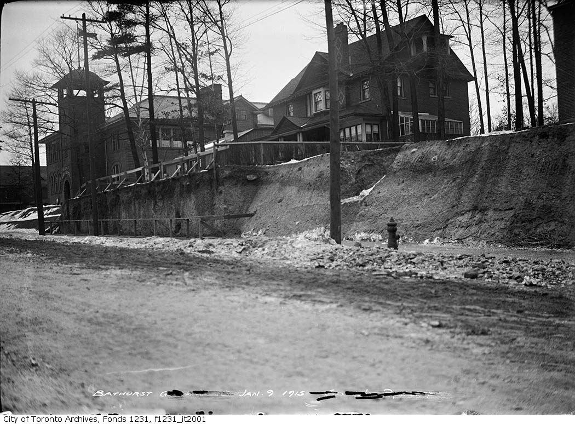
Fig. 8 the home of John Edwards Jr. on Bathurst Street, photographed on January 9, 1915; Hillcrest School is visible just north of the house. Photo: City of Toronto Archives, fonds 1230, item 2001
Other land owned in the name of the family business included 11 lots on Lyndhurst Avenue. One of these lots was at the north-west corner of Walmer Road and Davenport Avenue and was sold for $18,000 in 1905 to E.J. Lennox, the architect of Casa Loma. He built a house named Lenwil on that property. The house still stands. Another lot, adjacent to the west, was sold in 1909 for $17,000 to Albert Austin, the son of James Austin, founder of the Dominion Bank.[xxxiii]
On March 6, 1900 family patriarch John E. Edwards died of "softening of the brain".[xxxiv] The family burial plot is in the Prospect Cemetery. His four sons, all of whom were married and living in the neighbourhood, carried on the leather business which appears to have been thriving. By 1902 the factory employed about 40 people who lived in Bracondale. Most of these were female machine operators. Other occupations in the factory were leather cutter, harness fitter and japanner, all of whom were male. One driver was employed.[xxxv]
The eldest son, John, lived on Bathurst Street as previously mentioned. He had married Lillie Tooze and they had five children: Florence, Elsie, Allen, Frank and Harold.[xxxvi] Their house was situated at 1319 Bathurst Street, where the swimming pool and south playground of Hillcrest Community School are now. In 1907 it was valued at $2,000 for tax assessment purposes.[xxxvii] Just visible on the south side of the house is a frame conservatory added on in about 1912 at a cost of $150.00.[xxxviii] This house was sold to the school board in 1923 and served as the Domestic Sciences Department for Hillcrest Public School.[xxxix]
William H. Edwards married Elizabeth Jane Kerslake in 1886 and they had two children: William S. and Esther. They lived at 615 Christie Street near the factory. There is also a house marked on the 1899 Goad's Atlas on the house lot immediately south of the land for the factory. Both of the other two sons, James and Charles, lived on Christie Street and presumably this is where they lived with their widowed mother.
Of the four sons, William H. Edwards distinguished himself.
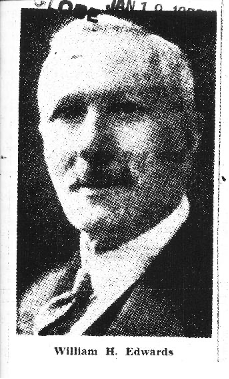
Fig. 9 William H. Edwards. The Globe and Mail, January 19, 1950. P9
He became a Conservative MPP for the riding of Toronto Northwest in 1923.[xl] He was re-elected for the riding of Bellwoods in 1926 and retired from politics in 1929.[xli] As an MPP he was a member of various Standing Committees, including Public Accounts, Railways, Private Bills and Standing Orders.[xlii] His obituary in the Globe states that he was involved in the mining industry in Cobalt[xliii] and he was a member of several organizations including the Canadian Manufacturers' Association, the Toronto Board of Trade, Sons of England, the United Workmen, the International Order of Foresters and the Loyal Orange Lodge.[xliv] Also mentioned is that he was a member of cricket clubs as a young man.
By 1913 William had moved from his humble home at 617 Christie Street to a grand house at 549 Christie Street (Fig. 8). The building permit for the house was issued to him on February 7, 1911 to erect a 2 1/2 story dwelling near Victoria Street (now Tyrell) on the east side of Christie Street. The architect was E. B. Varey of 12 Lyndhurst Avenue. The house is still there as 41 Tyrrel Ave., but difficult to view. It has been obscured by houses likely built in the 1950s after William's death and the sale of the surrounding land. However, its sister house, built by the same architect, can be seen at the south-east corner of Nina and Lyndhurst. The grounds of the Christie Street home occupied .95 acres at the south-east corner of Tyrrel and Christie Street. William lived at 549 Christie Street until he died on Wednesday January 18, 1950 at the age of 82. When the land around the house was sold its address was changed to 41 Tyrrel Avenue. William's son, William S. Edwards, had by this time moved to Cobourg Ontario where he carried on with leather manufacturing as Edwards and Edwards Ltd.[xlv]
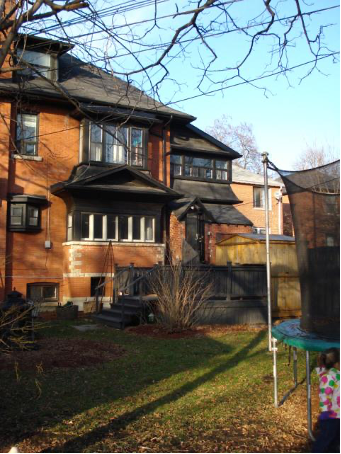
Fig. 10 William H. Edwards moved into this grand (circa 1911) house from his humble home at 617 Christie Street. The original house, with a Christie Street Address, sat on almost an acre; now 41 Tyrrel Avenue, the building is surrounded by other houses. Photo: Audrey Fox, December 3, 2013
Less is known about the other two brothers, James and Charles. James was born ca. 1870 while his father served in Ireland. He married Ada Jane Dickinson in 1905 and by 1921 they had two sons, Tyrell and Lorne.[xlvi] He continued in the manufacturing of leather; however it is not clear where. In the 1940 Toronto Directory there is a James Edwards, president of James Edwards and Co. Ltd., manufacturing leather goods on premises at 19 Paton Rd.[xlvii] Charles, born 1872 in Kent England, married Lucy Flight in Toronto in 1895 and by 1907 had three daughters, Margaret, Edith and Lucy, and a son Charles A. Charles Senior died in September of 1926.
One of the daughters of J. E. Edwards was Mary, born about 1880. She married Olander Dunsford, who also worked in the leather goods factory and continued in that business after the Christie Street factory closed. Mary and Olander had four children by 1921.[xlviii] In 1921 four Edwards families (William S., James, Charles and Mary) were all living on Christie Street side by side between Braemore Gardens and Benson Ave.[xlix] and all remained working in leather manufacturing.
In about 1912 another branch of the business opened at 56 Colborne Street (near Yonge and Front streets).[l]
Business was carried on in both these locations until 1922. At that time the Christie Street factory was demolished and another location was opened at 17 Paton Road.[li] Then by 1923 it appears that William H. and James were running two separate operations. William H. and his son William S. were vice President and President of Edwards and Edwards Ltd. at 24 Front Street. James was running the operation on Paton Road.[lii]
In 1913 there was very little development of house lots in the immediate vicinity of the factory property. There were no houses on the west end of Harrington Avenue (now Ellsworth). According to Assessment rolls there were only three houses on Benson facing the factory grounds.[liii] These were owned by more members of the Edwards family, cousins Henry George and Arthur J., who also worked in the leather business. Neither were there any houses on McKinley (now Slade) nor Tyrrel. On the east side of Christie Street from Braemore Gardens to St. Clair Avenue there were only eight dwellings and the factory. Four dwellings from Braemore to the factory grounds belonged to the Edwards family: William, James, Charles and Olander Dunsford. Four dwellings to the north of Benson housed William H. Garret at 617, a clerk in the factory; Horace Jordan at 625 Christie, a florist; Mary R. Blackwell, a widow, at 637; and on the south east corner of St. Clair Ave. and Christie was James O. Deegan, a paint maker. On Bracondale Avenue (now Wychwood Avenue) lived longtime resident Jeremiah Dinwoody.
Residences on the west side of Christie Street were equally sparse. At 564 Christie Street, north of Tyrrel, lived Charles Sharpley, a market gardener and florist. He was born in England in 1854 and ran a carriage making business with his father in Toronto until 1898. He then began his gardening enterprise and built a brick residence and hot-houses on his Christie Street land between Tyrrel and Benson.[liv] Henry Lewis lived just south of Benson at 590 Christie Street. Between Benson and Glenham (now Ellsworth Ave) at 618 and 620 Christie St. lived more members of the Jordan family, Walter and Albert, who were florists as well. (Fig.11)
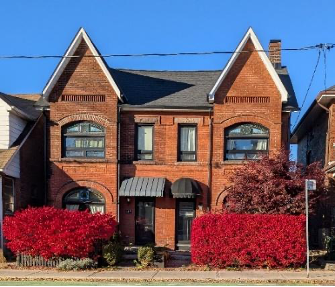
Fig. 11 618 and 620 Christie Street. Two homes of florists Walter and Albert Jordan. Photo: Stephanie Lever, November 2025.
George A. Moores, a bookkeeper, lived at 628 just before Glenham Avenue. At 642 and 646 Christie Street just north of Glenham were Dore Punnett and his father Richard respectively. They too were gardeners.[lv] There is something reassuringly cyclical about the return of market gardeners to the vicinity at the Wychwood Barns Farmers' Market on Saturday mornings.
But in 1913 the area was about to change, as plans were afoot to run a street car line along St. Clair Avenue West. The City of Toronto was looking for a site on which to build car barns to house the street cars that were to run along the soon-to-be finished St. Clair Avenue West street railway. They needed a conveniently located flat parcel of land and the Edwards property was deemed suitable. In 1912 the Board of Control of the City of Toronto had recommended purchasing property from the Edwards Estate to widen Bracondale Avenue (now Wychwood). From St. Clair Avenue south to Benson Avenue, it was widened to 66 feet and from Benson Avenue south to Tyrrell Avenue to 50 feet.[lvi] This alteration in the street can still be seen and at the time heralded the arrival of the St. Clair Avenue West street car line.
On June 30, 1913 the Toronto Board of Control requested that a "By-Law be introduced to expropriate the land at the corner of Benson and Bracondale (now Wychwood) Avenues, for the purpose of erecting thereon a properly equipped car barn for the St. Clair line."[lvii] And on July 2, 1913 the expropriation order was passed by City Council.[lviii] The mayor at the time was H.C. Hocken, whose name we can recognize from the street running east-west from Vaughan Road to Wychwood Avenue.
On August 25, 1913, the Toronto Star reported that residents of the area had been protesting the plans to place the carbarns in the neighbourhood.[lix] Also opposed to the carbarns were members of the St. Albans Cricket Club who, over several years, had developed a cricket field on the land. Its crease was regarded as one of the best in the city.[lx] The land was also the venue for soccer games and an annual Field Day and tournament run by the Wychwood Soccer Club. Their “splendid” program included music by the Army Service Corps.[lxi] The Edwards had offered this land for sale to the city, but for use as a park.[lxii] Despite opposition, carbarn 1 was built and completed on Dec. 13, 1913.[lxiii] However, it was some time before the deal was settled. In 1916 3.62 acres of the Edwards’ land was sold to the City of Toronto for $75,000.[lxiv]
Reminders of the history of the Edwards family are still visible in our surroundings. One is the house at 615 and 617 Christie Street. And the splendid house at 41 Tyrrel indicates the wealth attained by this family. Another is the name of Slade Avenue, commemorating Elizabeth Jane Slade, wife of John E. Edwards. We can see that the Edwards family contributed to both the economic and cultural life of the neighbourhood. They provided a substantial amount of employment for residents. Also, they supported sports by allowing the use of the lands for cricket, which was popular at the time and for soccer. Their support for the development of the local library was also a significant contribution to the community.
This article originally appeared in The York Pioneer, Volume 109, 2014. The Annual Publication of the York Pioneer & Historical Society. It has been recently edited to include an acknowledgement of the traditional territory of the Haudenosaunee and most recently the territory of the Mississauga of the Credit First Nation.
End Notes
[i] City council Minutes Toronto, Appendix A, page 664, 1912.
[ii] A Survey of St. Clair Avenue West, Community History Project.
[iii] Ontario Archives, York County Land Registry Office Records Abstract Index Books, City of Toronto and surrounding areas, ca.1800-1958, Toronto
[iv] http://wendysmithtoronto.com/parklotproject/ accessed Jan 29, 2014. That land is now a waterfront park.
[v] Community History Project, Guided Tour #10, Bracondale, Jane Beecroft, 1998.
[vi] AncestryLibrary.com – Quebec, Vital Church Records (Drouin Collection), 1621 -1967, accessed May 16, 2014
[vii] York County Land Registry Office Records Abstract Index Books, City of Toronto and surrounding areas, ca. 1800-1958, Toronto.
[viii] Ibid.
[ix] www.nationalarchives.gov.uk British Army Service Records, 1760-1915, accessed www.findmypast.org November 19, 2014.
[x] Commemorative biographical record of the County of York, Ontario, J.H. Beers and Co., Toronto, Ontario, 1907. page 66.
[xi] Toronto City Directories
[xii] Toronto City Directories.
[xiii] The Story of Emily Elizabeth Boggis Anderson, transcribed by Anderson, Lillian E., Toronto Tree, volume 28, issue 2, April/May 1997.
[xiv] A recent visitor to the Wychwood Barns told one of the WBCA executives that he was a descendant of one of the Edwards brothers and relayed the story of this prize. Unfortunately the person who spoke with him did not get his full name or contact information. No record was found through saddlers’ guilds in England.
[xv] Toronto Tree, volume 28, issue 2, April/May 1997.
[xvi] Fox, Audrey Hutchison, The Turners of Bracondale, The York Pioneer, vol. 94, 1999, page 6.
[xvii] find reference in the city directory.
[xviii] 1921 Census of Canada, RG 31, Folio 100, York, Township, York South, Ontario, page23.
The Toronto City Directory 1921, Might Directories Ltd., Toronto, 1921, page 123.
[xix] Community History Project, A Survey of St. Clair Avenue West, Toronto.
[xx] Di Distefano, Lynne, The Ontario Cottage: The Globalization of a British Form in the Nineteenth Century, TDSR Vol. XII, No. II, 2001. page 33. http://iaste.berkeley.edu/pdfs/12.2d-Spr01distephano-sml.pdf Sept 20, 2013.
[xxi] Commemorative Biographical Record of the County of York, Ontario. J.H. Beers and Co., Toronto, Ontario, 1907.
[xxii] Ontario Sessional Papers No. 2, 1899, page 123.
[xxiii] Ontario Sessional Papers Part 12, 1900, page 159.
[xxiv]The Toronto Daily Star, March 22, 1901, page 7.
[xxv] The Toronto Daily Star, March 4, 1902, page 11.
[xxvi] The Toronto Daily Star, May 3, 1902, page 11.
[xxvii] Lang, Isobel, The History of the Wychwood Library, Wychwood Library, Toronto Public Library, 2013. page 7.
[xxviii] Census of Canada, 1911.
[xxix] Lang, page 9.
[xxx] Minutes of the Bracondale Public Library Board, February 23, 1904, Wychwood Public Library, Toronto Public Library.
[xxxi] The Toronto Daily Star, September 14, 1906, page 6.
[xxxii] The Toronto Daily Star, September 4, 1906, page 12.
[xxxiii] Thompson, Austin Seton, Spadina: a story of old Toronto, Erin, Ont.: Boston Mills Press, 2000, page 198.
[xxxiv] Archives of Ontario, Registrations of Deaths, 1869-1938. MS 935, reel 95.
[xxxv] The Toronto City Directory 1902, vol 27, Might Directories Ltd., Toronto, 1902, page 49.
[xxxvi] Beers, page 66.
[xxxvii] Assessment roll for the municipality of York Township, Division 5, 1907, page 23.
[xxxviii] City of Toronto Archives, Building Permit number 32204, December 26, 1911.
[xxxix] The Toronto City Directory 1923, volume 48, Might Directories Ltd., Toronto, 1923, page 232.
[xl] http://www.ontla.on.ca/web/members/members_all_detail.do?locale=en&ID=1112 accessed 04/11/2013
[xli] Ibid.
[xlii] Ibid.
[xliii] It must be acknowledged that the development of mines in Cobalt caused severe environmental damage. The Mines Act of 1906 allowed mining companies to lay claim to minerals sitting under all public land, some private land and First Nations reserves. The president of the Cobalt Lake Mining Co., Sir Henry Pellatt, of Casa Loma fame, spent $1 m. to drain Cobalt Lake so the ore beneath could be accessed. This severely damaged the water supply for the First Nations in the area. (Toronto’s Buried History: the dark story of how mining built a city. Block, Niko, The Guardian, Friday, March 3, 2017. https://www.theguardian.com/cities/2017/mar/03/toronto-hidden-history-how-city-built-mining accessed November 26, 2017.
[xliv] Toronto Public Libraries, The Globe and Mail, January 19, 1950, page 9.
[xlv] Ibid.
[xlvi] 1921 Census of Canada, RG 31, Folio 91, Ward 5, Toronto North, Ontario, page 17.
[xlvii] Toronto Directory, 1940.
[xlviii] 1921 Census of Canada, RG31, Folio 19, Ward 5, Toronto North, Ontario, page 17.
[xlix] 1921 Census of Canada, RG31, Folio 91, Ward 5, Toronto North, Ontario, page 10, 17.
[l] The Toronto City Directory 1912, volume 37, Might Directories Ltd., Toronto, page 646.
[li] The Toronto City Directory 1922, volume 47, Might Directories Ltd., Toronto, page 845.
[lii] The City of Toronto Directory 1923, volume 48, Might Directories Ltd., Toronto, page 892.
[liii] City of Toronto Archives, City of Toronto Assessment Rolls:1912, Ward 5, Div. 3, reel 243.
[liv] Beers, page 172.
[lv] The City of Toronto Directory 1913, volume xxxviii, Might Directories Ltd, Toronto, 1913.
[lvi] City Council Minutes Toronto 1912, Appendix A, page 663.
[lvii] City Council Minutes Toronto 1913, Appendix A, page 1120.
[lviii] City Council Minutes Toronto 1913, Appendix B, page 599.
[lix] Toronto Daily Star, August 25, 1913, p. 10.
[lx] Ibid, July 14, 1913, p. 12.
[lxi] Ibid, July 17, 1913, p. 14.
[lxii] Toronto Star
[lxiii] Hood, William J., The Toronto Civic Railways: An Illustrated History, Upper Canada Railway Society, Toronto, 1986. P. 24.
[lxiv] York county Land Registry Office Records Abstract Index Books, City of Toronto and surrounding areas, ca.1800-1958, Toronto.